Children who experience difficulties with reading, spelling or writing
Families seeking a clear understanding of a child’s strengths, needs, and learning profile
Parents wanting evidence-based recommendations to support learning at home and in school
Students
Students requiring formal assessment for assessment arrangements
Learners who want to understand why certain tasks feel more challenging
Anyone who finds reading, spelling, or writing harder expected
Adults
Individuals who have experienced ongoing difficulties with reading, writing, or spelling and want clear answers
Professionals experiencing literacy difficulties in the workplace
Anyone seeking practical strategies, including assistive technology and reasonable adjustments, to support literacy skills
What happens before and during an assessment?
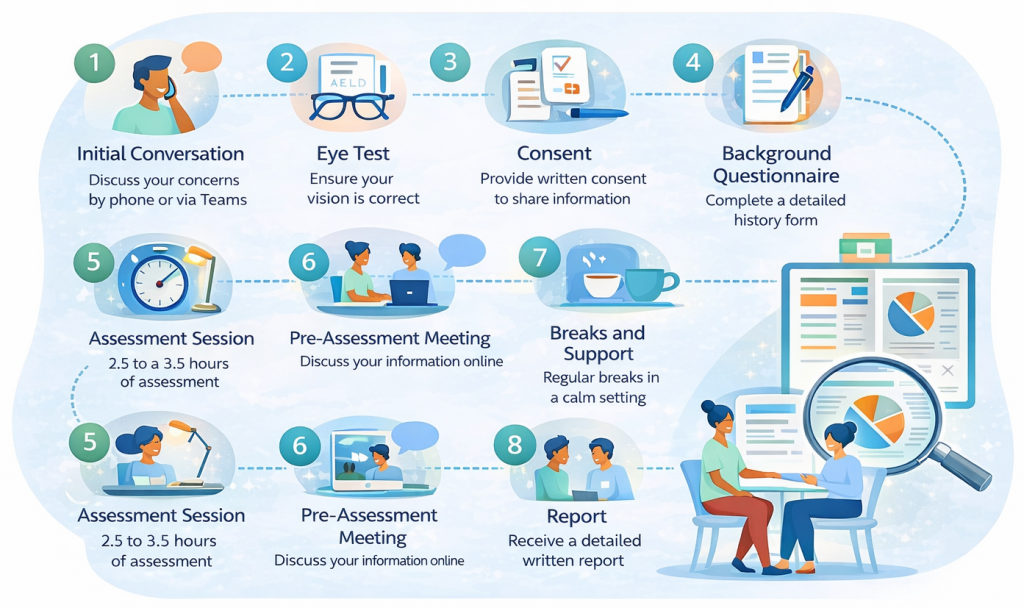
1. Initial Conversation
Before an assessment is booked, we arrange an initial conversation by phone or via Teams. This allows us to discuss your concerns and decide together whether a full assessment is the most appropriate next step.
2. Eye Test
You will need to have an up-to-date eye test before the assessment takes place. This helps ensure that any difficulties are not related to an underlying vision issue.
3. Consent
Before any personal information is shared, written consent is required. This ensures that your information is handled confidentially and appropriately.
4. Background Questionnaire
You will be asked to complete a detailed questionnaire covering background information, learning history, and current concerns. This helps build a comprehensive understanding before the assessment day.
5. Pre-Assessment Meeting
An online meeting is arranged to discuss your questionnaire in more detail. This is also an opportunity for you to ask questions and feel comfortable with the assessment process.
6. Assessment Session
The assessment typically lasts between 2.5 and 3.5 hours, depending on the areas being explored. The assessment may include:
Cognitive skills (such as working memory and phonological processing)
Attainment skills (including literacy and mathematics)
7. Breaks and Support
Regular breaks are offered throughout the session. The assessment is carried out at a calm, supportive pace to ensure you feel comfortable.
8. Report
Once the assessment has been completed and scored, you will receive a detailed written report.
This explains the findings clearly and includes practical, personalised recommendations for support at school, work, or home.
9. Feedback Session
After you have had time to read the report, a feedback session is offered to talk through the results and answer any questions.
Get in touch!
We are here to help you with any questions or queries you may have.